More and more European cities are using strategic foresight to tackle key urban challenges, from citizen engagement to sustainable development. This workshop showcases real cases from different countries, highlighting how cities apply foresight tools like scenario planning, trend analysis and other methods to shape policies, engage communities and plan for the future. Participants will gain insights into how foresight helps cities anticipate change, address emerging issues and create more resilient urban strategies.
- Governance and Public administration | International | Local and regional | Sustainable | Territorial | Urban
- Code: 15PD252012
- Jacques Delors building, JDE 53



Moderator

Practical information
- When
-
Wed 15/10/2025, 09:30 - 11:00 CET
- Where
- Jacques Delors building, JDE 53
- Type of partnership
- Partnership
- Format
- Political/policy debate
- Theme
-
Cities building tomorrow
- Languages
- English, French, German
Partners
European Committee of the Regions

Municipality of Breda
Krakow Festival Office - Trends Observatory for Culture
Hauts-de-France Region
Reporting
Session summary
Foresight for Cities: How Local Authorities Anticipate Change
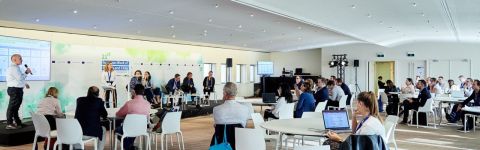
As part of the 2025 European Week of Regions and Cities, the European Committee of the Regions hosted on 15 October a session on “Foresight for Cities”, showcasing how local authorities across Europe are using foresight to better prepare for the future.
Jelena Drenjanin, Member of the Municipal Council of Huddinge (Sweden), opened the session by describing foresight as “the art and science of looking ahead to inform better decisions today.” In a world of accelerating change, she underlined that foresight is not a luxury but a necessity for local and regional authorities – the level where early signals of change are first detected. From demographic shifts to urban transformation, foresight helps turn signals into choices and supports more proactive and resilient policymaking. She also stressed the importance of citizen involvement and co-design to ensure faster implementation and stronger ownership of future strategies.
Representatives from Munich, Breda, Kraków, and the Hauts-de-France region shared concrete examples of how foresight is being embedded in municipal governance.
• Klaus Illigmann (City of Munich, Germany) explained how urban forecasting and foresight underpin long-term planning in Germany’s third-largest city. Forecasts on population, schools, and social infrastructure feed directly into digital development plans. Munich is now exploring how artificial intelligence, including its own model, can further enhance urban foresight and policy delivery.
• Lieve Hezemans (Municipality of Breda, Netherlands) presented Breda’s new foresight team, which uses megatrend analysis and participatory dialogue to prepare input for the city’s next political cycle. Integrating foresight into planning systems, Breda aims to make long-term thinking a standard part of decision-making.
• Carolina Pietyra (Kraków Festival Office, Poland) showcased the “Wesoła District” project – a place-making and co-creation initiative transforming a former hospital site into a hub for social innovation. Using tools such as horizon scanning, scenario building, and backcasting, the project enables citizens to prototype tangible solutions for the district's future.
• Aurore Sorin (Agence Hauts-de-France 2020-2040, France) described the region’s foresight work on revitalising city centres through participatory scenario-building. Some cities, she noted, struggle to imagine long-term futures; foresight helps them identify directions and priorities. Creative formats, such as publishing foresight results in comics, make these visions accessible to wider audiences.
Finally, Maija Knutti from the European Commission's Joint Research Centre presented the Future-Oriented Policy-Making project. This initiative will provide practical guides, training materials, and a community network to help public administrations across Europe develop futures-oriented mindsets. Participants were invited to join as beta-testers before the project’s full launch in 2026.
The session highlighted a shared message: foresight enables municipalities to anticipate change, engage citizens, and shape resilient, future-ready solutions.
This was the third edition of the foresight workshop organised by the CoR as part of the EU Regions Week.
For further details, please contact: AI-StrategicPlan@cor.europa.eu